Product design · Responsive web · NFC & BLE
An app-free networking experience for an NFC smart-card start-up
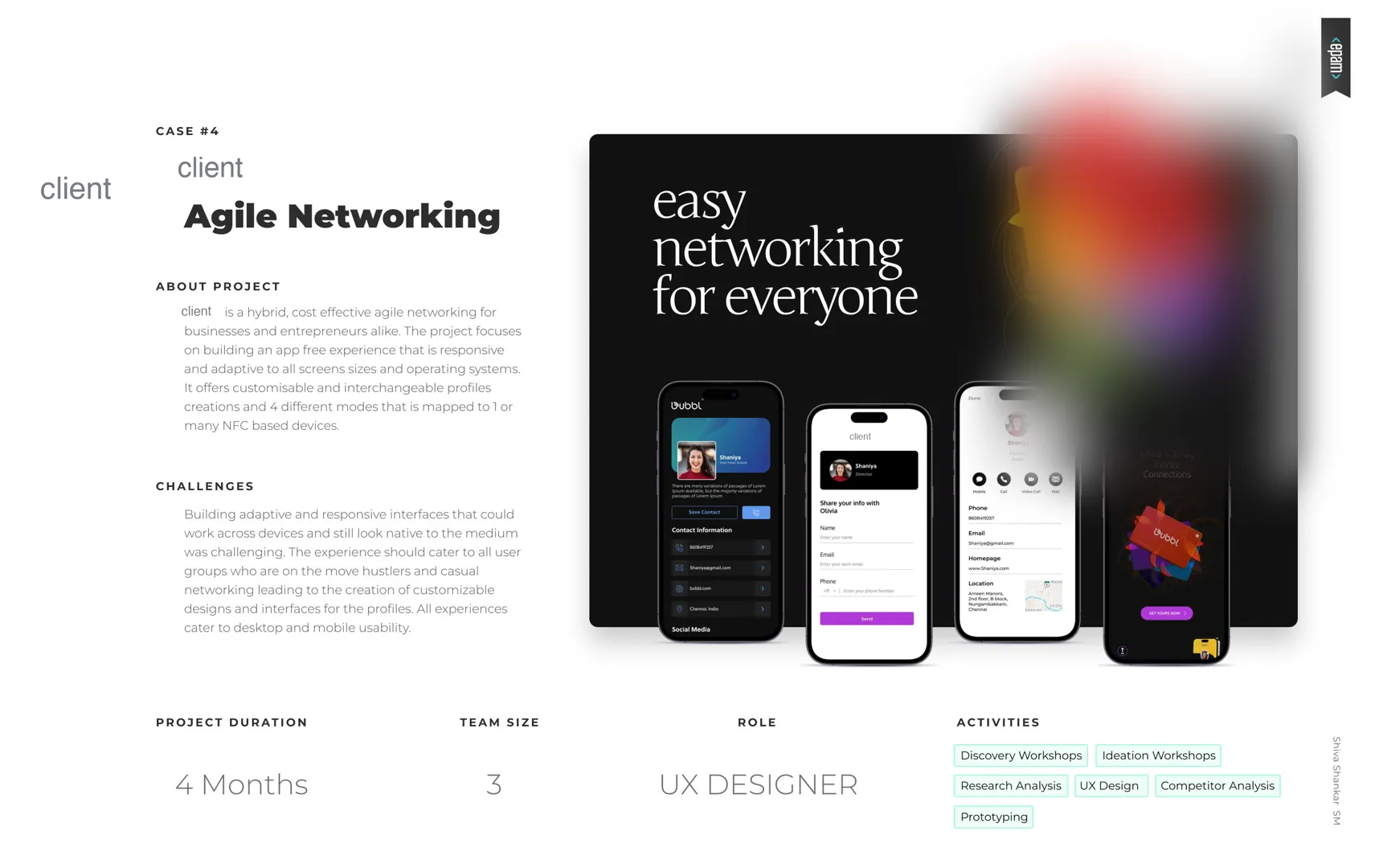
A hybrid, cost-effective way for businesses and entrepreneurs to network. No app to install: a responsive experience that adapts to every screen size and operating system, with customisable, interchangeable profiles and four modes mapped to one or many NFC devices.
- Role
- UX designer
- Duration
- 4 months
- Modes
- Contact card · profile · direct URL · lead forms
- Activities
- Workshops · competitor analysis · prototyping
Challenge
Native-feeling on every device — without being native.
Building adaptive, responsive interfaces that work across devices and still feel native to each was the challenge. The experience had to serve everyone from on-the-move hustlers to casual networkers, which led to customisable designs and interfaces for profiles, on desktop and mobile alike.
- Made for everyone
- App-free
- Fully customisable
- Real-time business intelligence
- Built for 1 or for 1,000
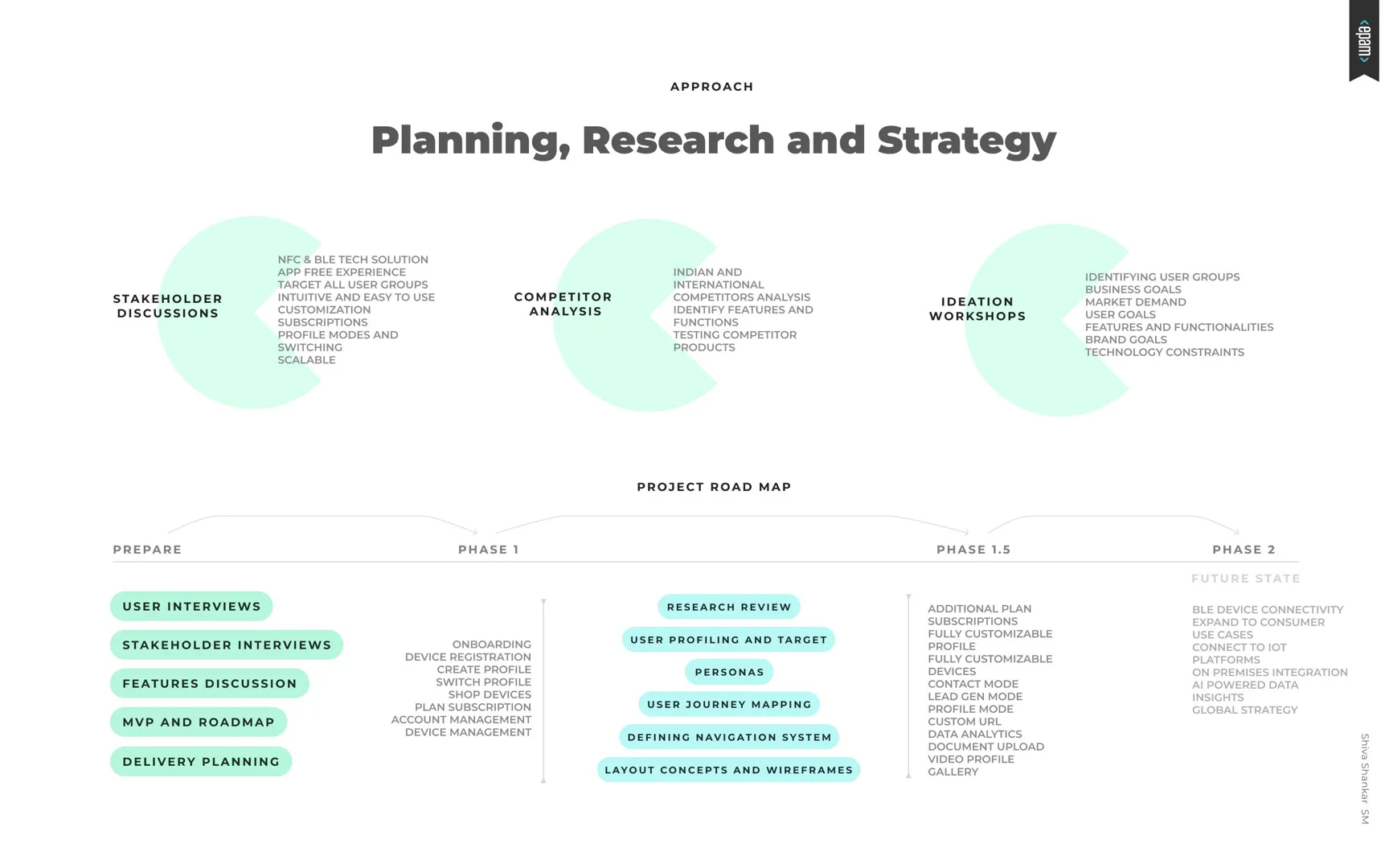
Planning, research & strategy
A roadmap from MVP to future state.
- PrepareStakeholder interviews, research review, user profiling
- Phase 1Onboarding, device registration, create and switch profiles, shop, plans, account and device management
- Phase 1.5Additional plans and fully customisable profiles and devices
- Phase 2Contact, lead-gen and profile modes, custom URLs, analytics, documents, video, gallery
- FutureBLE connectivity, consumer and IoT use cases, AI-powered insights, global strategy
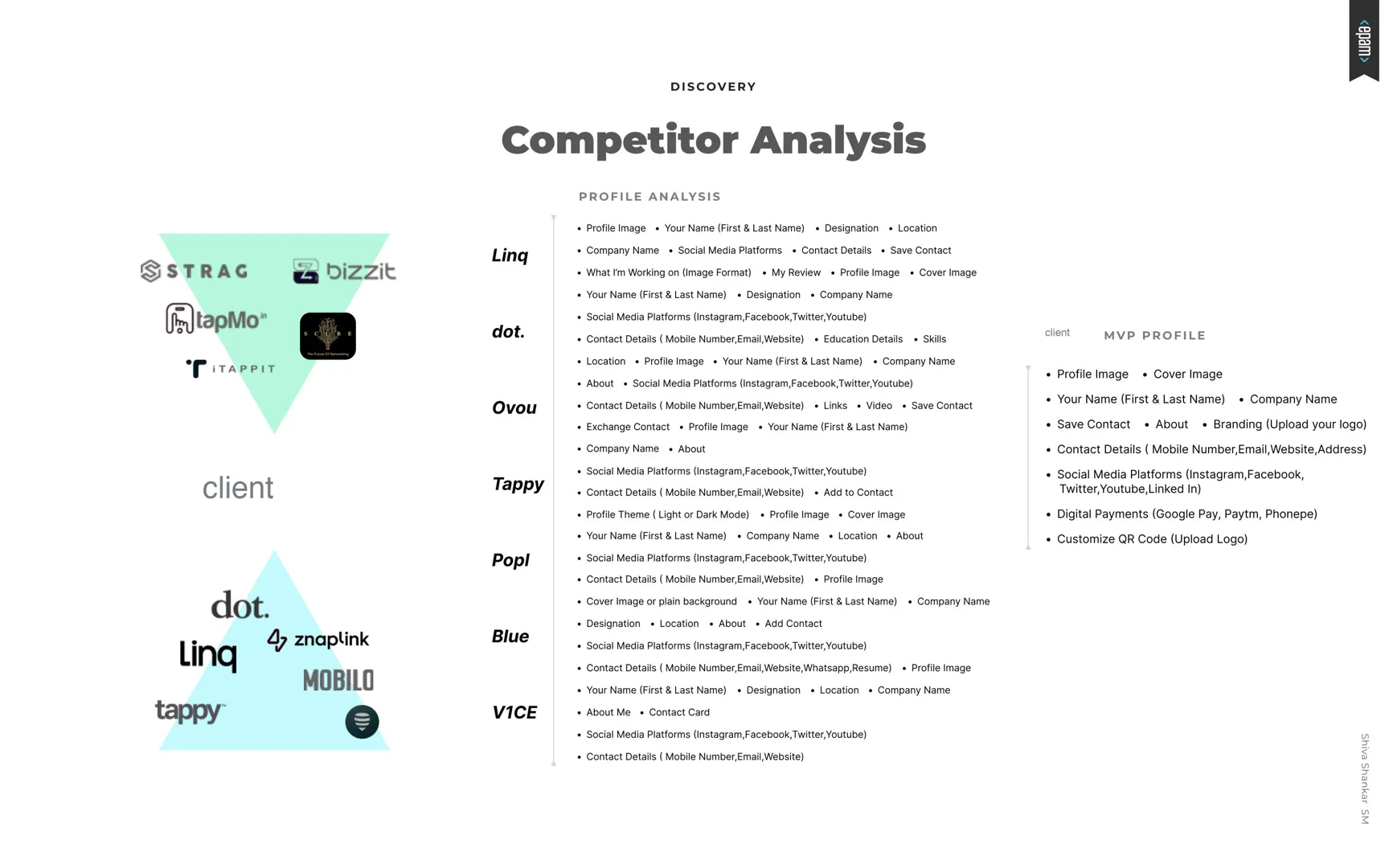
Alongside: Indian and international competitor analysis and testing of competitor products; ideation workshops; personas, feature discussions and journey mapping; MVP and roadmap; the navigation system; delivery planning; layout concepts and wireframes.
Discovery
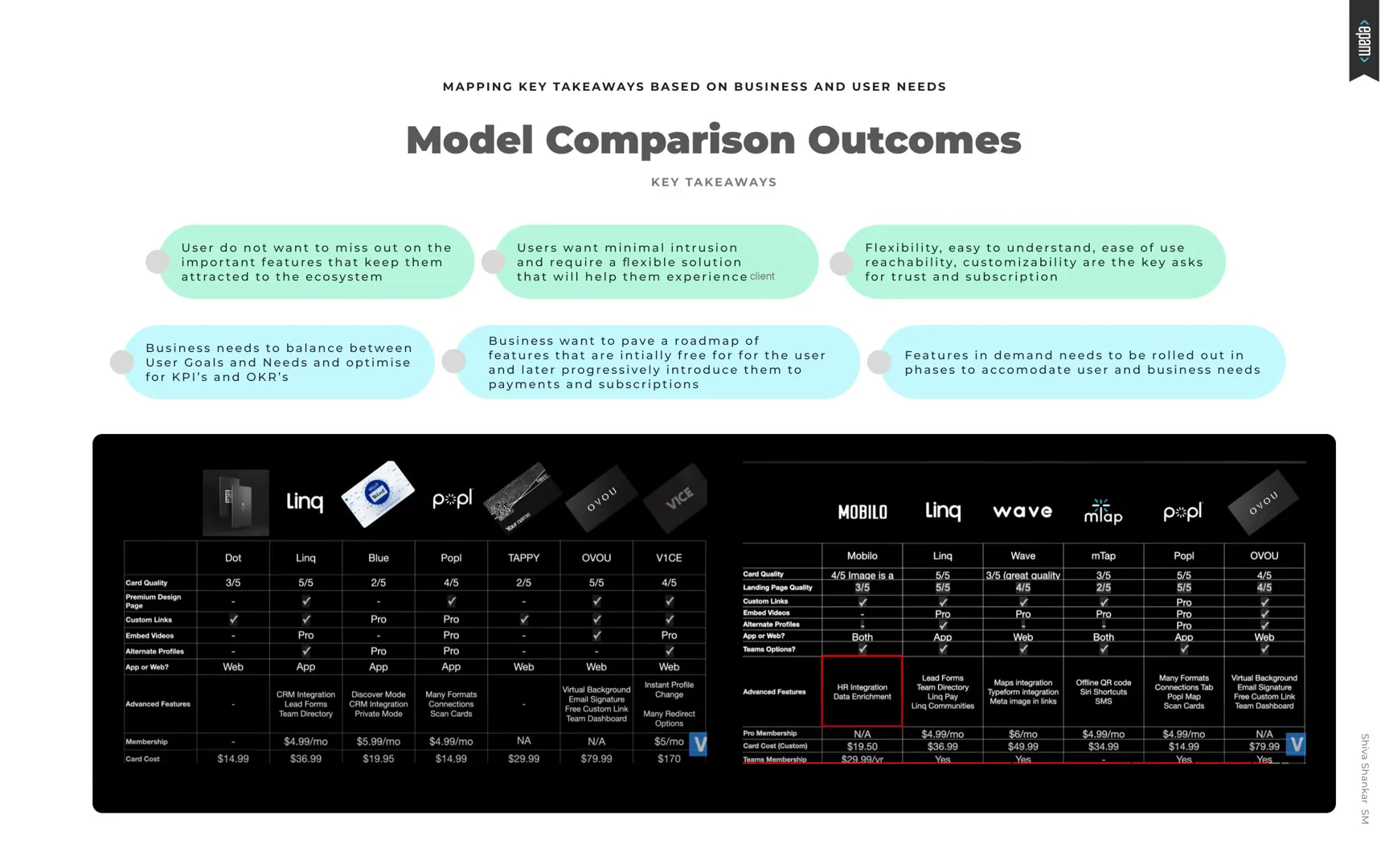
What people need to trust — and pay.
Users don't want to miss the important features that keep them in the ecosystem.
Users want minimal intrusion and a flexible way to experience the product.
Flexibility, ease of use, reachability and customisation are the asks for trust and subscription.
The business must balance user goals with KPIs and OKRs.
Features start free and progressively introduce payments and subscriptions.
Features in demand roll out in phases to serve both users and the business.
User flow maps
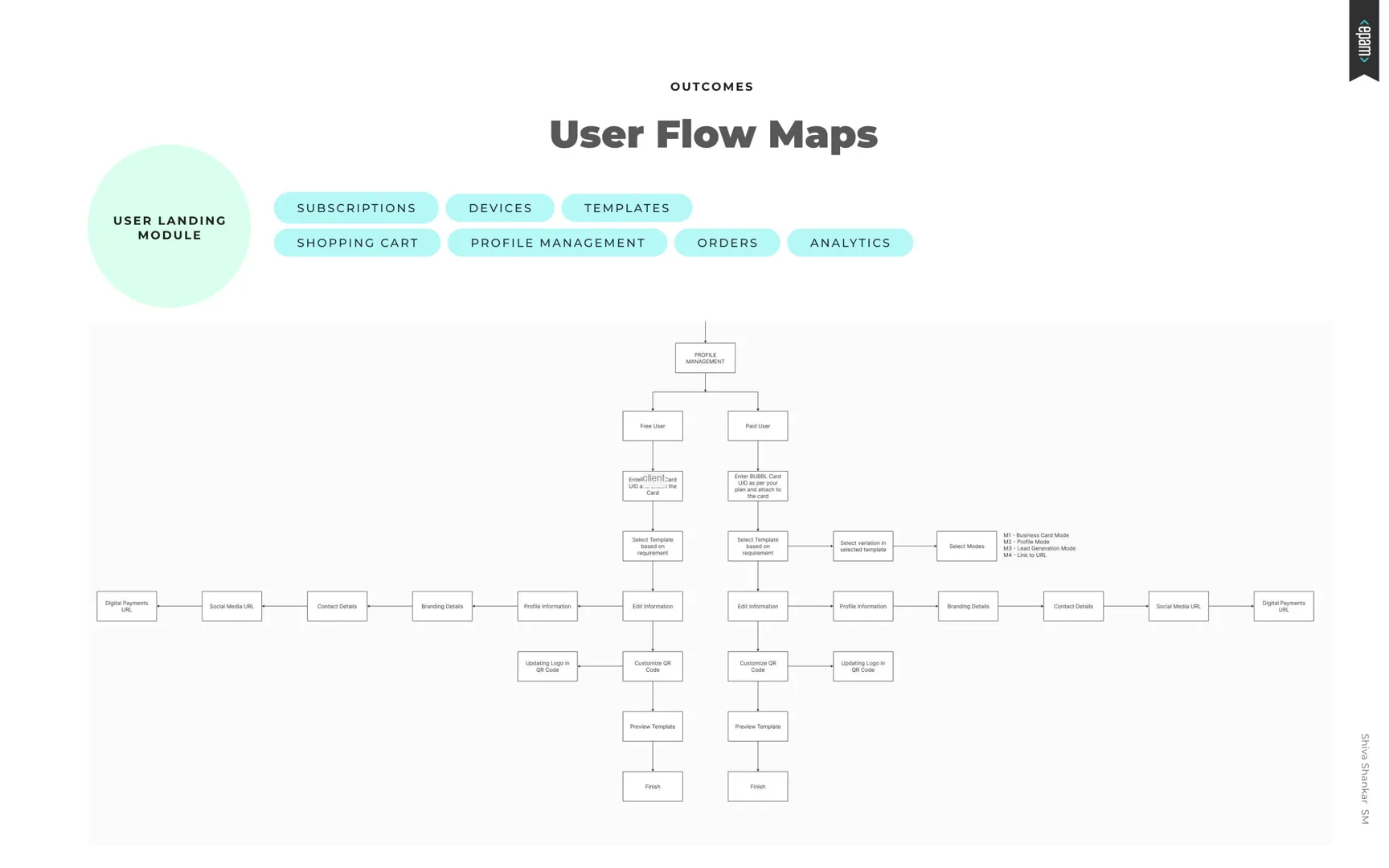
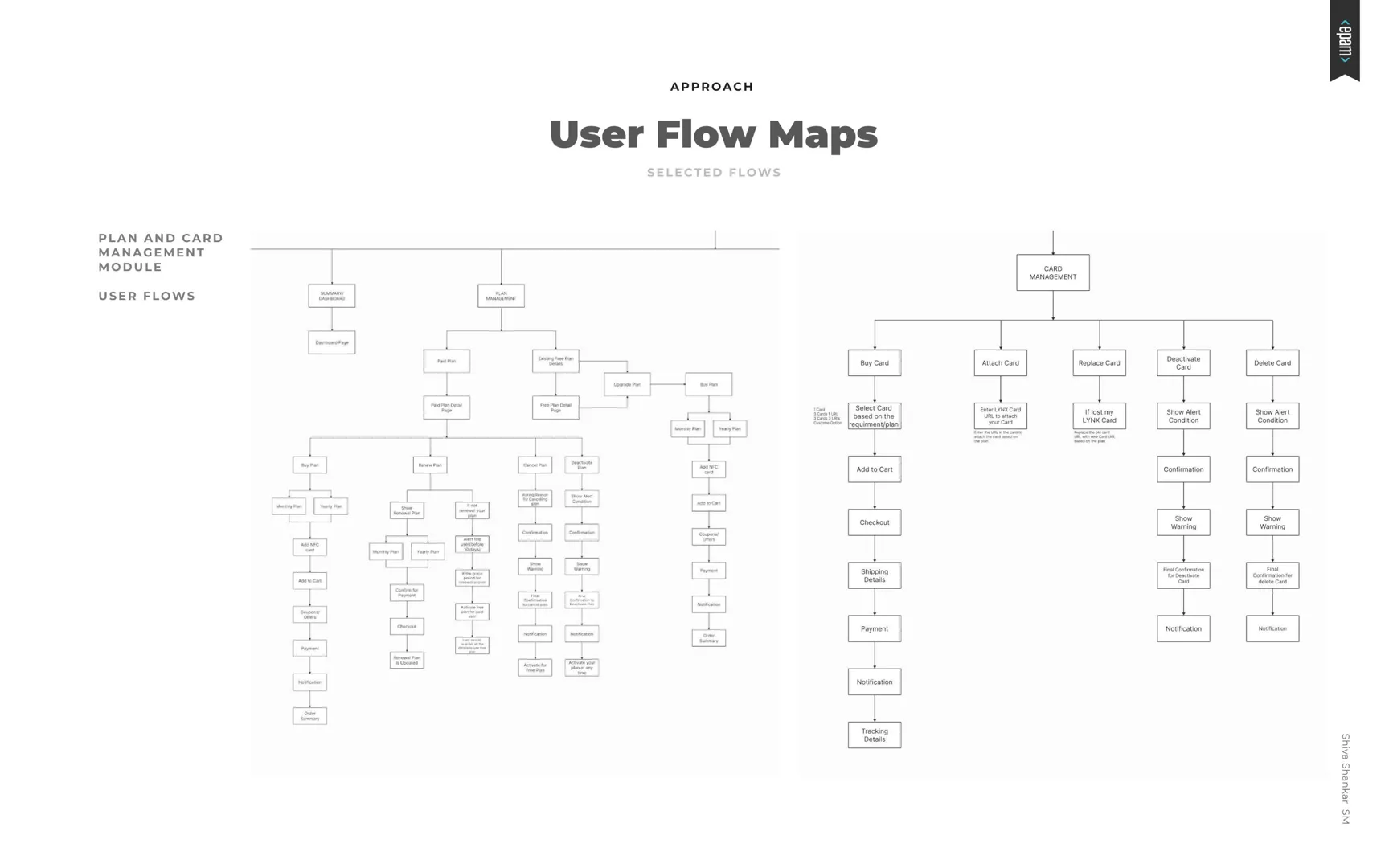
Subscriptions, devices, templates, profiles.
Modules: user landing, registration and feedback, subscriptions, devices, templates, profile management, shopping cart, orders and analytics.
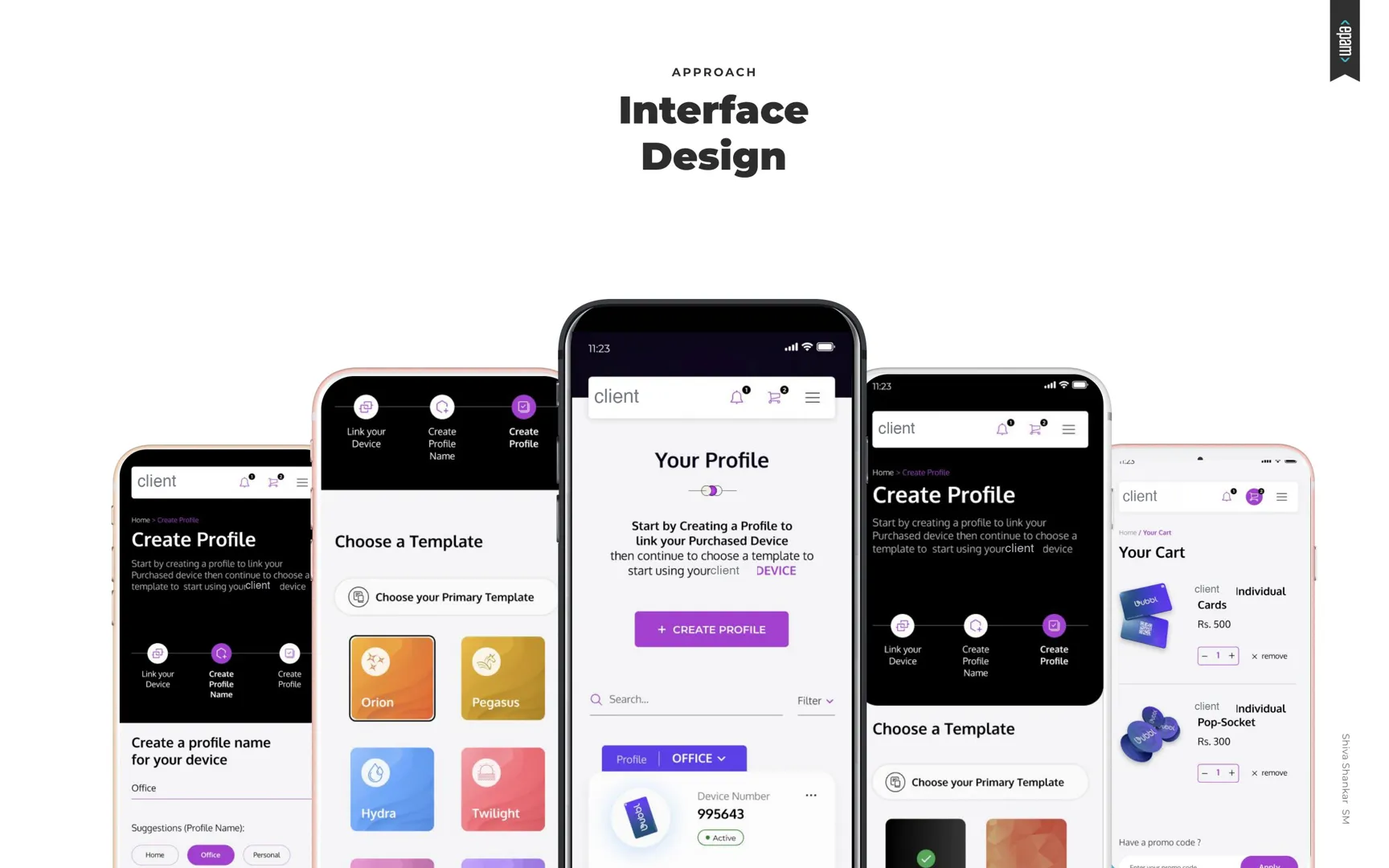
Wireframes & interface
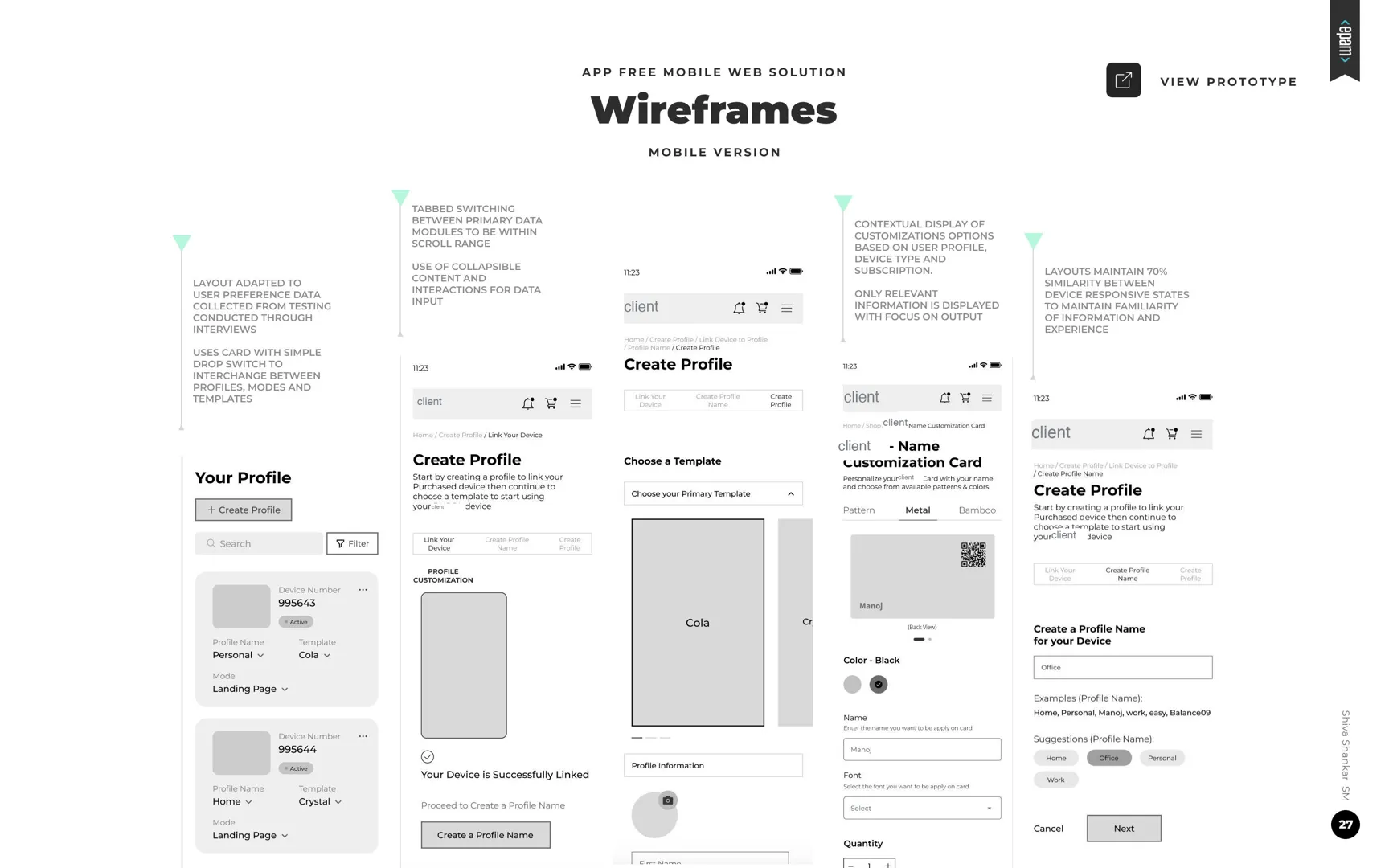
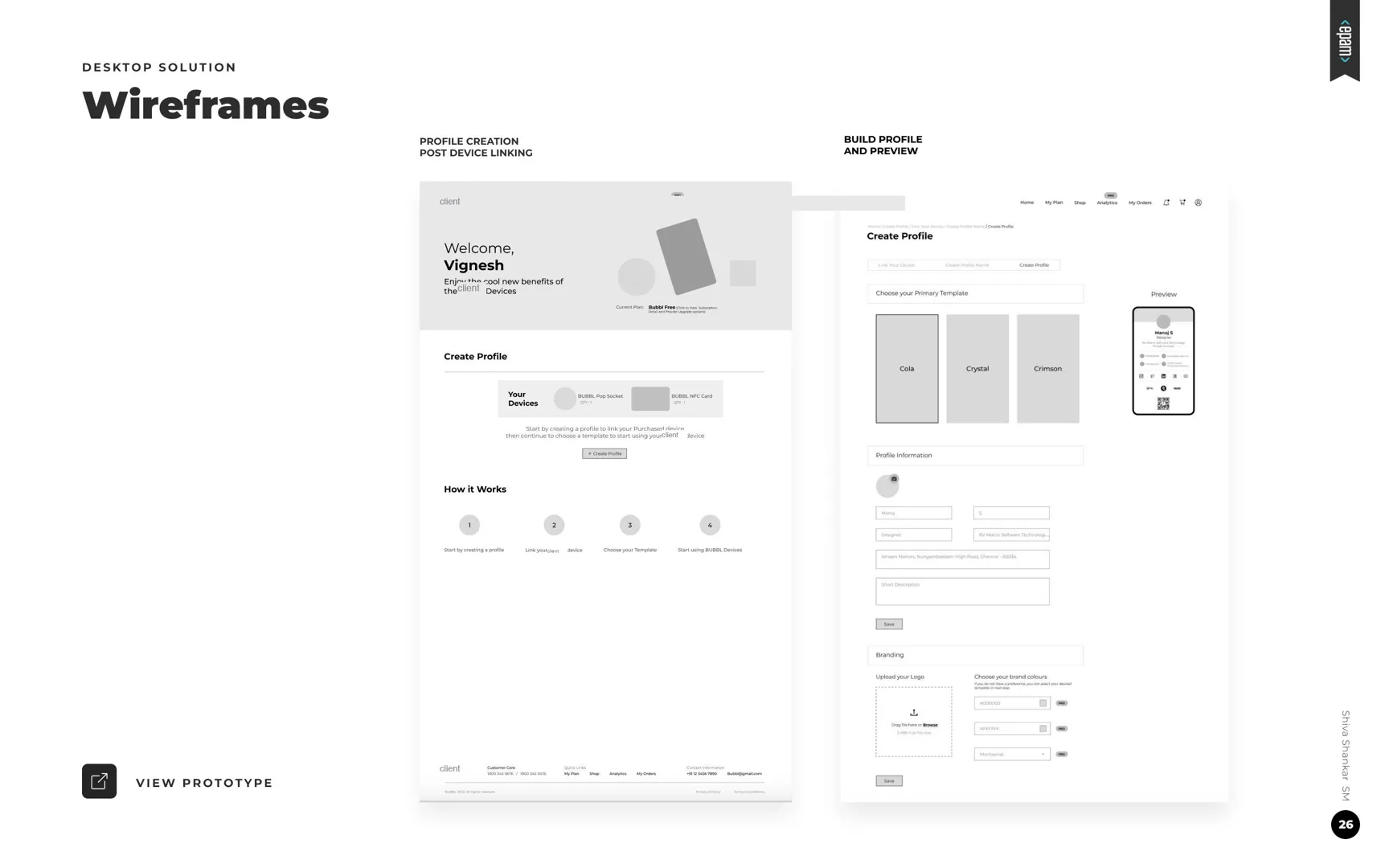
One experience, 70% the same everywhere.
Tabbed switching between primary data modules, within scroll range; collapsible content and interactions for data input.
Customisation options shown by profile, device type and subscription — only what's relevant, focused on output.
Layouts keep 70% similarity between responsive states, so information and experience stay familiar.
Cards with a simple drop switch to change profiles, modes and templates — adapted from interview testing.
On desktop, the flow runs from linking a device to building a profile with a live preview — branding, contact details, social links, digital payments, embedded video and images, and a customised QR code.